How Melbourne’s Samians are keeping history alive
03 / 08 / 2026 Mary Sinanidis
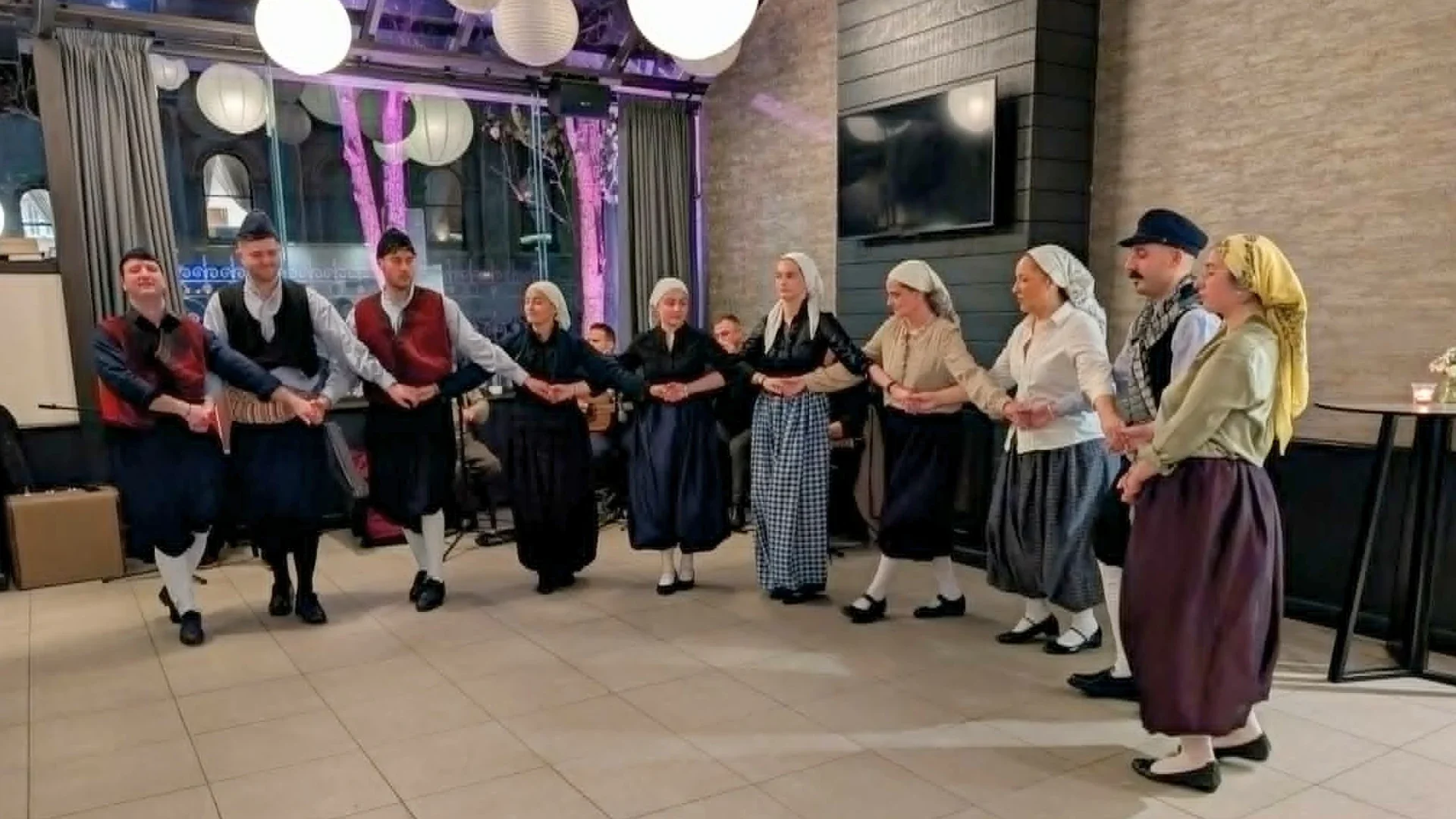
For almost a century, Melbourne’s Samians have gathered every August to dance.
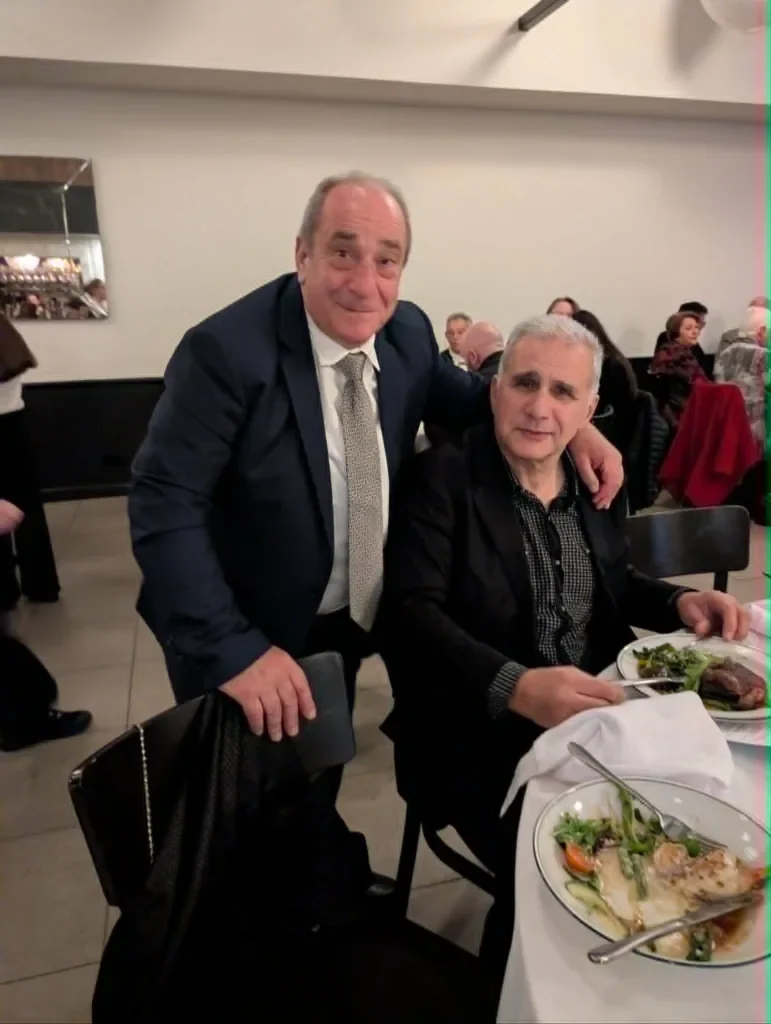
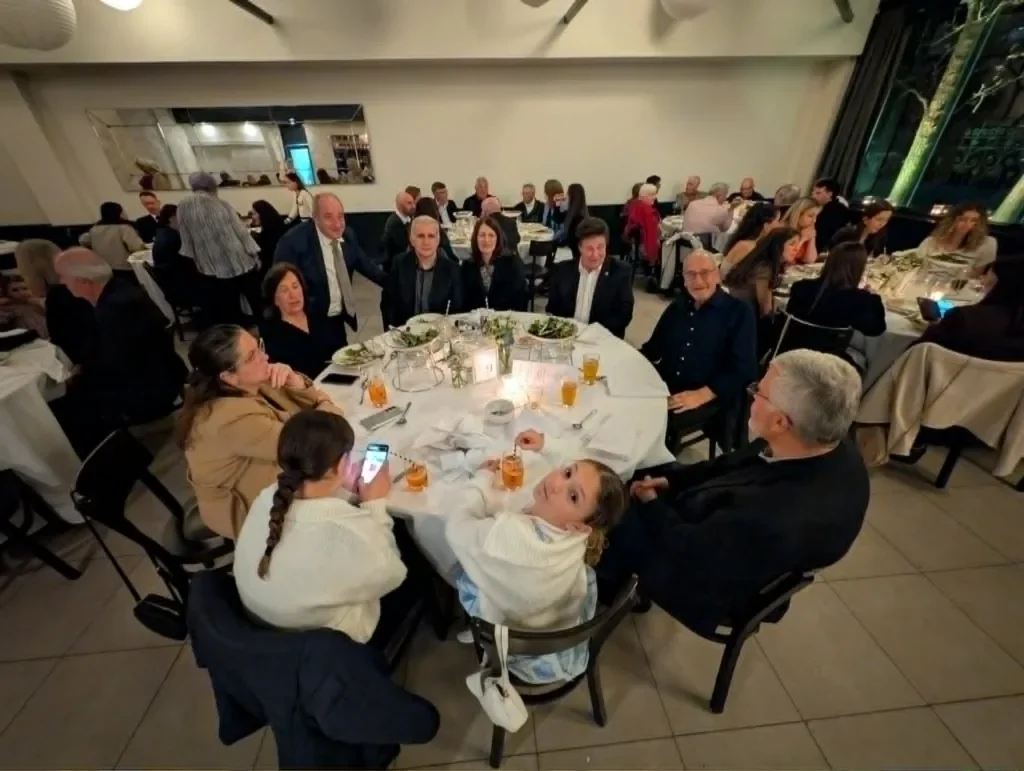
To outsiders it looks like another community glendi, but for those filling St Andrew’s Hall in Fitzroy on Saturday, every dance, every violin tune and every linked hand was an act of remembrance; a way of honouring an island that fought for its freedom while ensuring its stories are never forgotten.
The annual Pansamian Brotherhood celebration commemorates the liberation of Samos from Ottoman rule in August 1824. A second milestone follows in November, marking the island’s union with Greece in 1912. Yet as conversations flowed between tables and dancers linked arms, it became clear the event was about something much bigger than history.
It was about remembrance and survival.
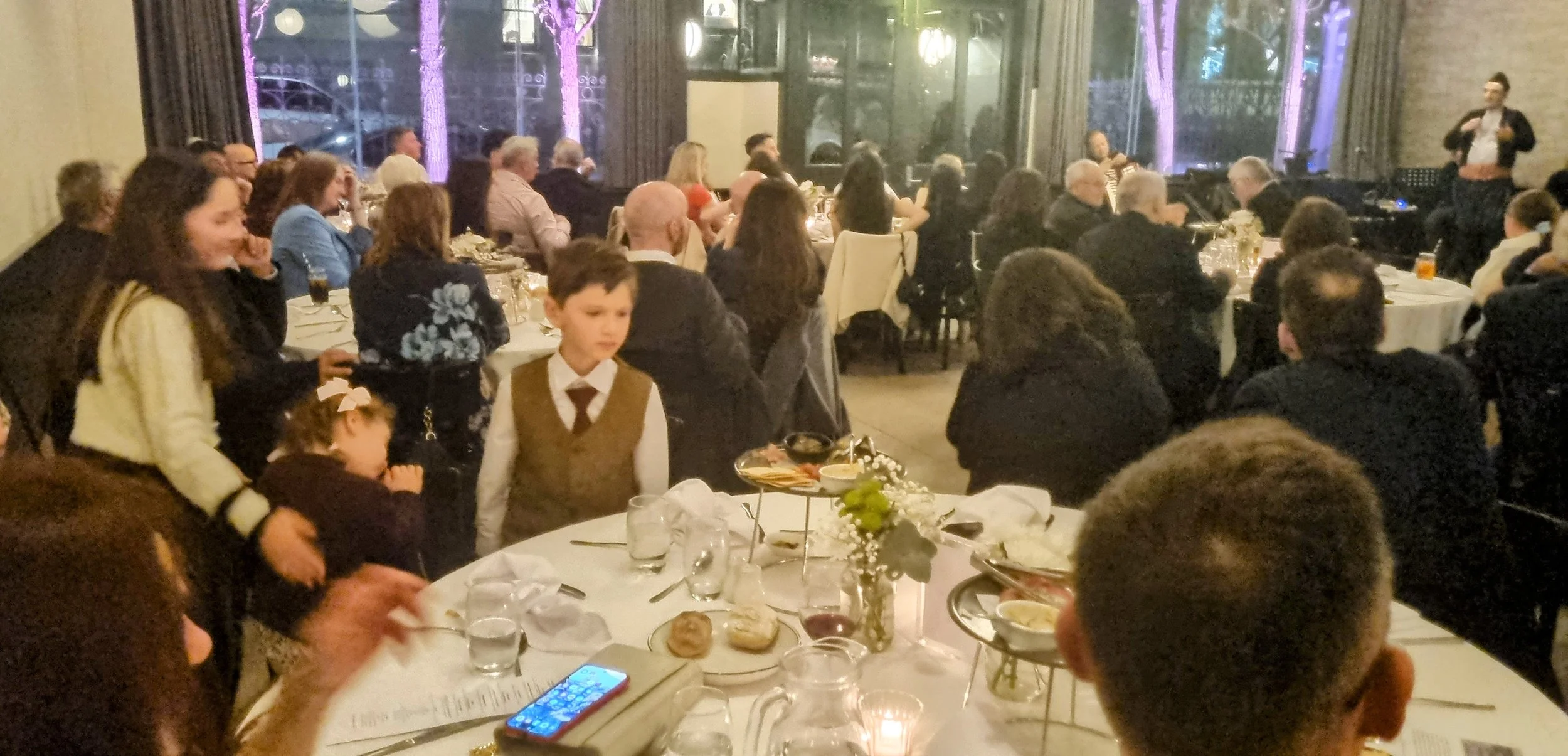
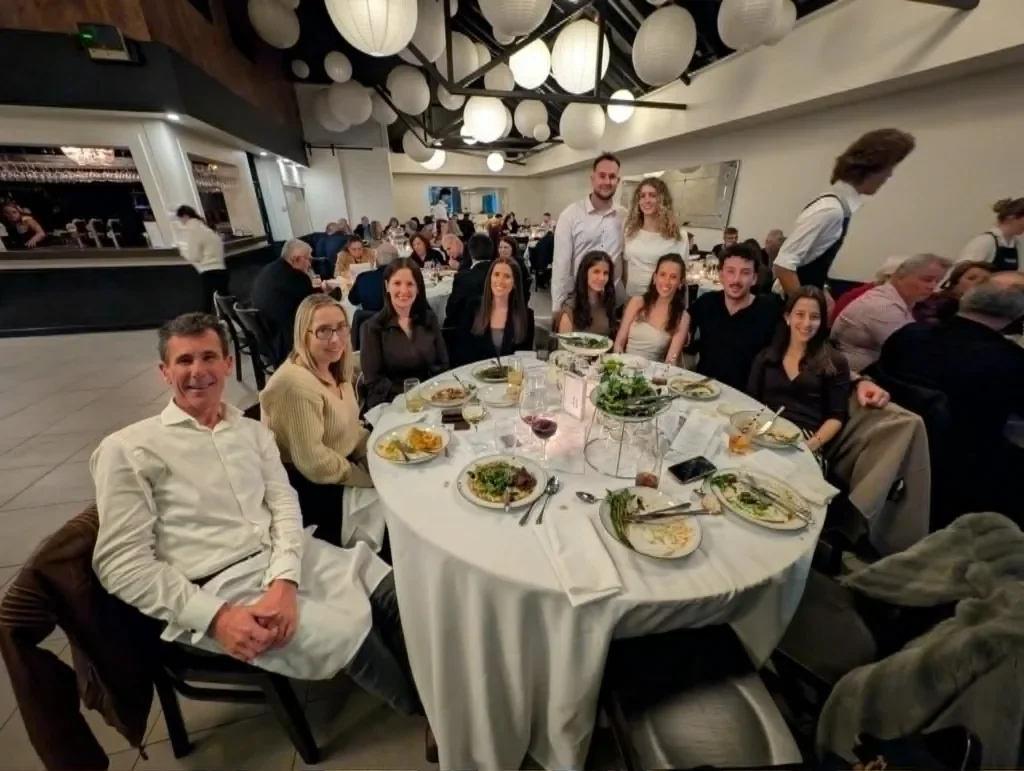
Asked about how aware Samians are of the reason behind the annual celebration, Pansamian Brotherhood President Alex Kalimniou hands me a printed copy of the Battle of Samos. “If they read the printed history of the Battle of Samos at their tables, they will be,” he joked. Every table featured a short account of the famous naval battle that secured the island’s freedom, a simple but powerful reminder that history deserves a place alongside dinner and dancing.
“If you ask people here why we celebrate, many won’t know,” he admitted. “That’s why we put the history on every table. Years ago, this wasn’t just a dance. It was our Samian National Day.”
The association itself has weathered enormous change.
Now in its 92nd year, it once owned its own hall before selling the property and investing the proceeds to subsidise community events.
“We charge about $60 for a function that really costs more than $120,” Kalimniou said. “Otherwise, people simply couldn’t afford to come together.”
Like many Greek organisations, the Pansamian Brotherhood has watched attendance shrink as generations change and migration patterns evolve.
Yet on Saturday night there was one encouraging sight: young faces.
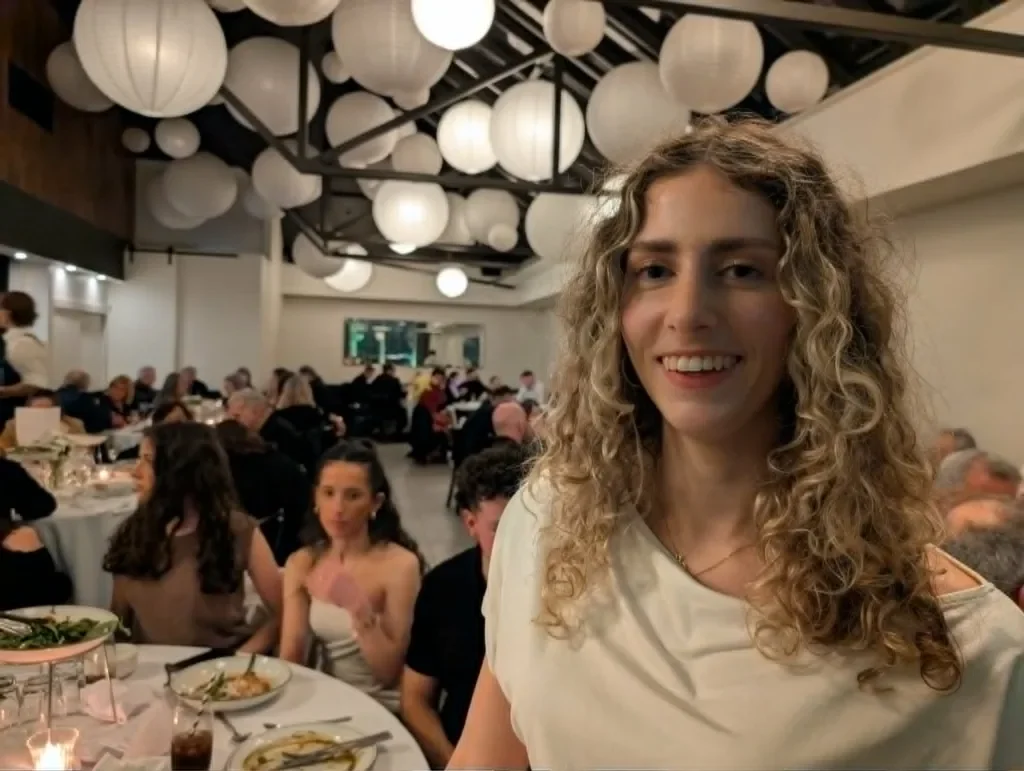
A group of cousins in their twenties happily posed for photographs before returning to the dance floor.
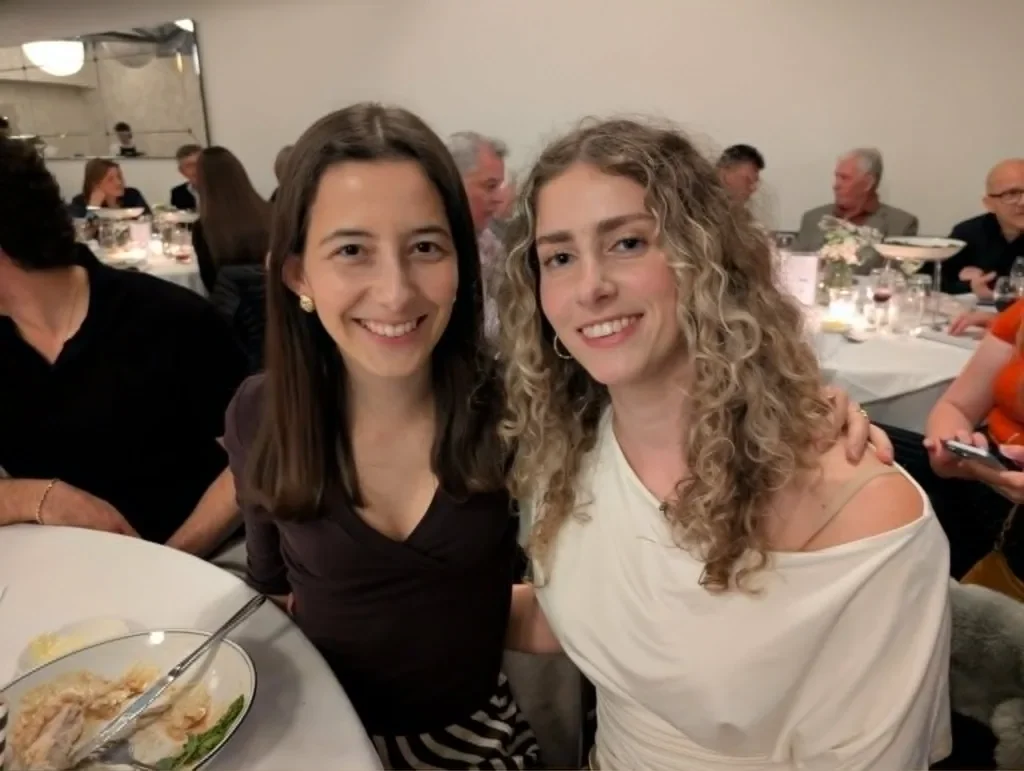
Melanie Makris, whose family comes from Ampelos, said visiting Samos had strengthened her connection to the island.
“You hear stories about it growing up, and we still have family there,” she said. “It’s nice to visit because you feel connected.”
She believes younger Greek Australians would become more involved if more opportunities existed for them.
“I’d love to,” she said when asked whether she’d join a youth committee. “I think it would be fun.”
The cousins laughed as they reminisced about childhood Mother’s Day lunches, games and dances at the old Samian clubrooms.
“What I remember most is being together as a family,” Melanie said. “These events are how everyone catches up.”
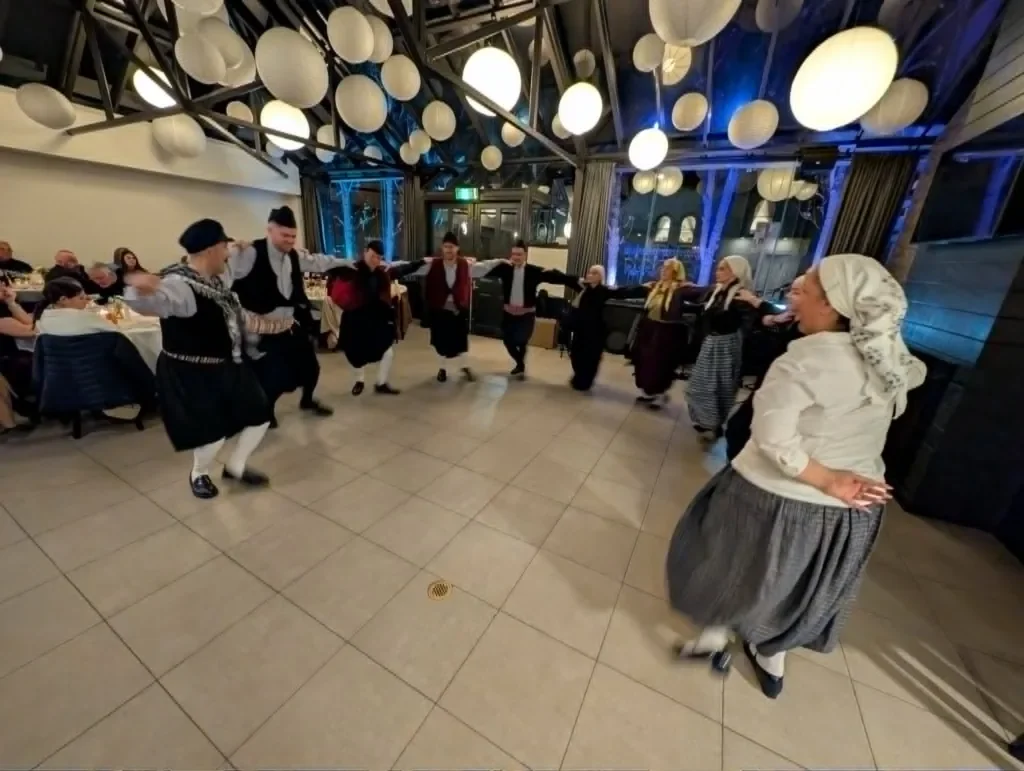
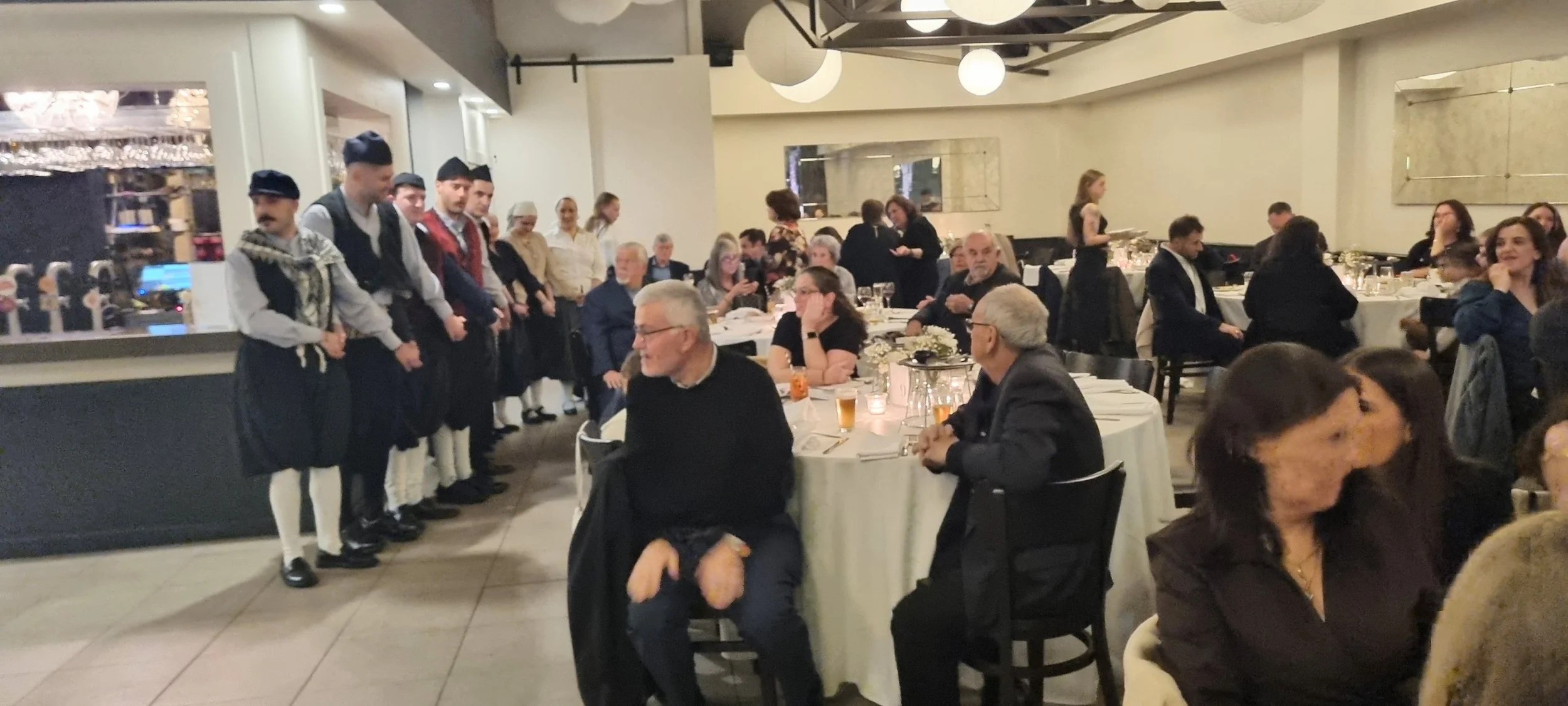
For dance teacher Nick Papaefthimiou, those family memories are where paradosi (παράδοση) truly begins, and as he introduced a suite of authentic Samian dances, including Koursarikos, Karavas and Plataniotiko, he urged the audience to look beyond the dance steps and remember that culture survives only when each generation faithfully passes it on to the next.
“‘Paradosi’ doesn’t simply mean tradition,” he told the audience. “It means passing something from one person to another.”
The word itself comes from the Greek verb paradido (παραδίδω), meaning “to hand over” or “to pass on”. Tradition, Papaefthimiou reminded the audience, is not something preserved in museums, but something entrusted from one generation to the next through language, music, food and dance.
He argued that authentic regional dances are inseparable from Greece’s cultural identity.
“If we lose that,” he said, “what are we promoting?”
He also expressed concern that many traditional dances are increasingly performed as staged entertainment rather than being handed down in their authentic regional forms.
But it was his closing words that lingered long after the music stopped.
“‘Χορέψτε γιατί χανόμαστε’. Dance because we’re disappearing.”
The message resonated around the room.
Among those listening was Hellenic RSL President Manny Karvelas, himself deeply connected to Samian families.
“I’ve always had a sense of belonging through Samos,” he said. “That’s why we support these events.”
The evening also quietly celebrated another form of cultural preservation.
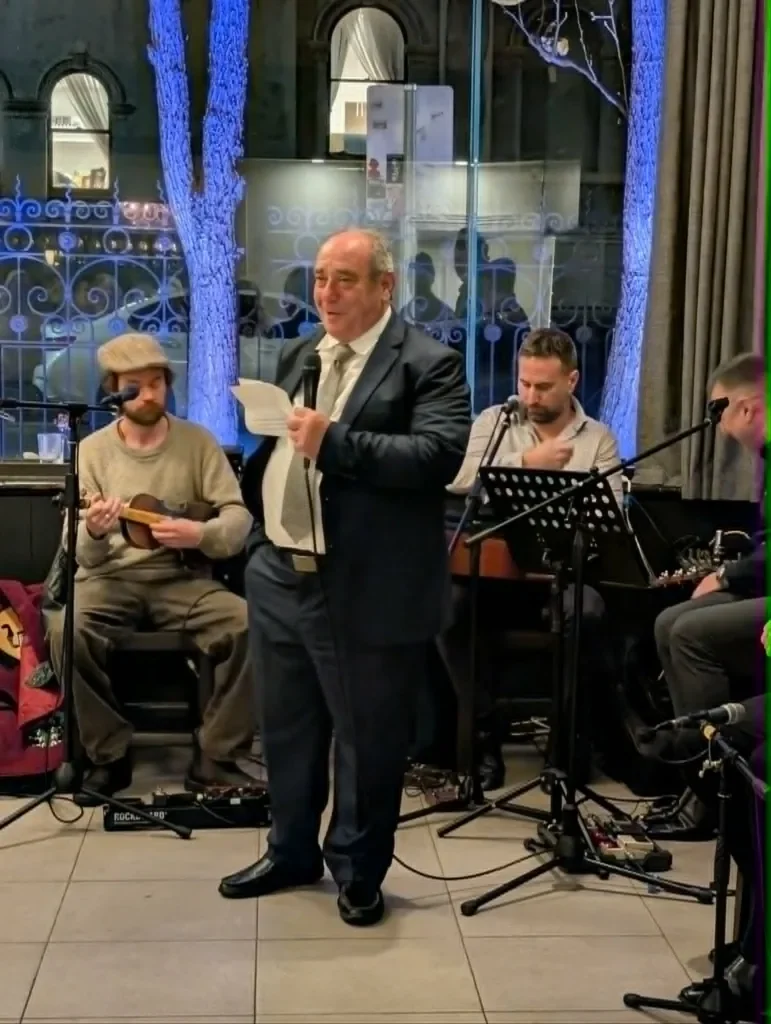
Kalimniou spoke proudly of his wife, respected educator Helen Kalimniou, whose lifelong commitment to Greek language education has extended well beyond the classroom.
“My grandkids speak better Greek than I do,” he laughed. “I grew up here and knew very little until Helen taught me.”
It was a remark delivered with affection, but it captured the purpose of the night better than any formal speech.
Culture survives because someone chooses to practise paradosi—the act of passing something from one generation to the next. That transmission doesn’t happen only in classrooms or textbooks. It happens around kitchen tables, in village squares, at community halls and through music.
No one embodied that idea more unexpectedly than Australian musician Paddy Montgomery, who performed with traditional ensemble Demotika. Although he has no Greek heritage, Greek traditional music has shaped his life for more than two decades.
“It wasn’t the bouzouki or the laïko that drew me in,” he said. “It was the Cretan music.”
Hearing legendary musician Giorgos Xylouris and the haunting sound of the Cretan laouto changed the course of his musical life.
“It scratched an itch I was looking for musically,” he said. “The rhythms, the melodies and especially the sound of the laouto really hit me.”
After studying with renowned musician Ross Daly, Montgomery’s journey is proof that Greek traditional music speaks not only to those born into it, but also to those willing to embrace it.
As the final syrtos wound around the hall, grandparents danced beside grandchildren, young cousins laughed with elderly relatives, and strangers became one circle. Nearly 200 years after Samos fought for its freedom, the evening was a reminder that history isn’t preserved in books alone. It lives in language, music, memory and dance, and survives only when each generation chooses to take the next person’s hand.
Walking Samos – On the trail of poets, warriors and the Blackbeard of the Aegean
A must read about Samos in Neos Kosmos newspaper by Historian Jim Claven.